

Women’s Leadership & Collective Action
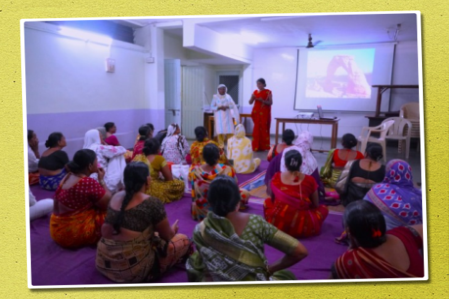
In the narrow lanes of Surat's slum communities, something remarkable is happening. Women who were once confined to the edges of public life are now walking into government offices, questioning ration shop owners, monitoring schools, and leading their neighbourhoods toward dignity and justice. This is not a story about a programme. It is a story about women reclaiming their power together.
Where It Begins : The Mahila Mandal
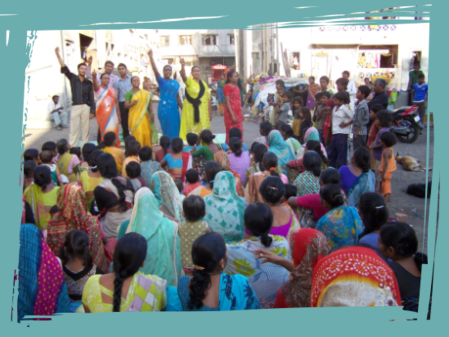
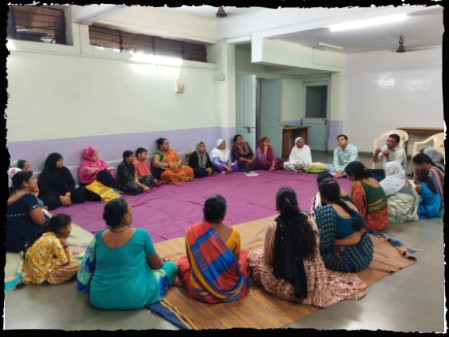
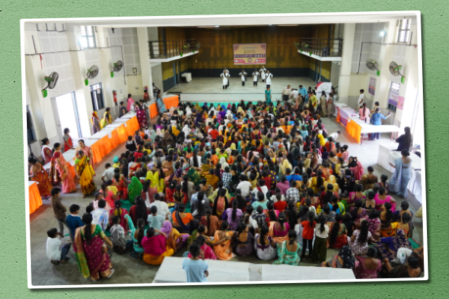
Every transformation starts somewhere small. For Navsarjan, it begins with a circle of women sitting together in a slum lane, talking about what is wrong in their community and what they can do about it. These circles are called Mahila Mandals, women's collectives that Navsarjan has helped form across 32 slum areas in Surat. They are living, breathing communities of women who meet regularly, argue, plan, visit government offices, and hold the powerful to account.
Over 2,600 women participated in core meetings in 2023–24 alone. Thousands more were reached through street-level Gali meetings informal gatherings held right in the neighbourhood, where women talk about health, rights, local problems, and life. Because real change doesn't only happen in meeting halls. It happens in conversations between neighbours.
From Spectators to Citizens
One of the most powerful things a Mahila Mandal does is simple, yet profound, it takes women to places they have never been before. For many women in these communities, a government office, a police station, or a health centre feels like a foreign world. Intimidating. Not meant for people like them. Navsarjan changes that, one visit at a time.
Women visit local schools to meet principals and ask hard questions about quality. They walk into ration shops to check whether fair grain is being distributed. They sit with Anganwadi workers to learn about new government schemes their families are entitled to. They meet ward councillors, supply officers, and health centre officials not to beg, but to engage as citizens who have every right to be there. In 2023–24, Mahila Mandal members made over 22,000 family visits, 842 Anganwadi visits, 422 ration shop visits, and 366 school visits. Behind every number is a woman who was not doing this a few years ago and now cannot imagine stopping.
Learning, Earning, Growing
Empowerment without opportunity is incomplete. That is why Mahila Mandals, working through the NAVCHETNA Trust, offer a range of programs that open doors for women and children in the community. Children in the slums find their first classroom in Navsarjan's Balwadis, warm, welcoming kindergartens that give them the foundation every child deserves. Older students receive tutoring support to keep them in school. Women learn to use computers, gaining skills that belong to the modern world. And tailoring classes give women a craft, a confidence, and often a livelihood. These are not charity programmes. They are investments in people who have always had the capacity to grow they just needed the chance.
Building Financial Roots
Real independence means financial independence. Navsarjan supports women in forming self-help groups that can eventually join Bhagyalaxmi, a women-run credit cooperative society. Through savings, credit access, and collective financial planning, women begin to build security for themselves and their families. The Mahila Mandals themselves are built to be self-sustaining generating income through student fees, community hall rentals, and other local resources, so they do not remain dependent on outside support. The goal is always to stand on their own feet.
Held Together by NAVCHETNA
All Mahila Mandals are brought together under the NAVCHETNA Trust, a federation that supports without controlling. NAVCHETNA ensures each group remains transparent, accountable, and growing while leaving the leadership and decision-making exactly where it belongs: with the women themselves.
What Changes When Women Lead
The numbers tell part of the story. But the real change is harder to measure, it is the woman who once stayed silent in a room full of officials and now speaks first. It is the group that identified a broken drain in their lane and got it fixed. It is the mother who knew nothing about her child's rights and now teaches other mothers. When women lead, communities heal. When women act collectively, systems listen. That is what Navsarjan's Women's Leadership & Collective Action programme is built on and what it continues to prove, one lane, one meeting, one woman at a time.